Mattress Buying Guide
Choosing an Organic Crib Mattress: Fit, Materials, and Care
A crib mattress is easy to mistake for a simple rectangle: pick a size, choose a surface, make the bed. But for a baby’s sleep space, those details carry unusual weight. A sound choice starts with a secure fit and a firm, flat surface, then moves to materials, certification claims, and a care routine that does not alter the mattress or add unnecessary layers.
“Organic” can be a useful clue about how certain materials were grown or processed. It is not, by itself, a complete measure of safety, quality, or suitability for an infant. A thoughtful comparison asks what is actually certified, what the mattress is made of, whether it fits the crib specified by its manufacturer, and how its maker says it should be cleaned.
That approach matters because a crib mattress is not simply a miniature version of an adult bed. It is part of a sleep environment designed around a baby’s needs. The safest choice is not necessarily the one with the longest list of appealing adjectives. It is the one whose dimensions, firmness, construction, and instructions are clear—and whose use follows current safe-sleep guidance.
Start with the crib, not the label
Before comparing cotton, latex, or other materials, identify the crib and the mattress size it requires. Use the crib manufacturer’s instructions as the authority. A mattress that appears to fit is not necessarily a safe fit: small gaps between the mattress and crib sides can create a hazard. The mattress should sit securely in the frame, with no significant space around its edges.
Standard crib dimensions are common, but names such as “standard,” “mini,” and “portable” do not guarantee that every product will suit every frame. Dimensions can vary, and some cribs are designed for a specific mattress. Measure only as a cross-check; do not substitute a measurement for the crib’s instructions. When in doubt, contact the crib or mattress manufacturer and ask whether the exact models are compatible.
Also confirm that the mattress rests properly on the crib’s support system. The mattress should lie flat, without bowing, rocking, or being forced into place. If the crib has adjustable mattress heights, use the setting directed by the crib maker for the baby’s age and development. As a child becomes able to sit, kneel, or stand, the appropriate setting may change. The crib manual explains how and when.
Fit is a practical issue, not a finishing detail. A well-made mattress in the wrong size is still the wrong mattress. Verify the dimensions, intended crib type, and installation guidance before purchase, and check the fit again after setting it up.
Firm, flat, and made for infant sleep
For an infant, the sleep surface should be firm and flat, with a fitted sheet made for that mattress. A firm surface helps reduce the risk associated with soft bedding and other hazards. “Firm” is not a promise that a mattress will feel comfortable to an adult’s hand; it describes the kind of support intended for infant sleep. A soft, plush, deeply padded surface is not a substitute for an appropriate crib mattress.
Follow current safe-sleep advice from recognized public-health authorities, including the guidance of the American Academy of Pediatrics where applicable. In general, babies should be placed on their backs to sleep on a firm, flat, non-inclined surface in a separate sleep space designed for infants. Keep pillows, quilts, loose blankets, stuffed toys, positioners, and other soft objects out of the crib. A mattress purchase does not replace the need to follow the crib’s instructions and safe-sleep recommendations.
Do not try to change the feel of a crib mattress by adding a topper, cushion, extra pad, or improvised layer. These can make the surface softer or less secure and may create gaps or other hazards. Use only accessories that are permitted by the crib and mattress manufacturers and consistent with safe-sleep guidance; for routine infant sleep, the basic setup is deliberately simple.
Questions about a baby’s individual health or sleep needs belong with a pediatric health professional. A retailer’s description, a certification mark, or a parent’s preference is not medical advice.
What “organic” does—and does not—tell you
Organic claims can refer to a particular fiber, such as cotton, rather than every component in the finished mattress. A cover might contain certified organic cotton while the core, seams, backing, or other layers follow different specifications. In another product, a material claim may apply only to a portion of the construction. The useful question is not simply, “Is it organic?” but “Which material is certified, by whom, and to what standard?”
Read the certification’s scope. Some standards concern agricultural production and the processing of textile fibers; others evaluate emissions or chemical content. These are distinct questions. A certification for a fabric does not automatically certify the mattress as a whole, prove that every component is organic, or establish that a product is safer for every baby. A manufacturer should be able to identify the certified material, the standard, and the certificate or certification body supporting the claim.
Labels such as GOTS may be relevant when evaluating organic textile materials, while other programs address different aspects of products or their production. The name of a standard matters less than understanding what it covers. Look for exact wording on the product label and documentation, not just a logo on a sales page. If a claim is broad but the explanation is vague, ask for specifics before relying on it.
“Natural” and “organic” are not interchangeable. Nor do either of those terms mean “chemical-free”: all physical materials are made of chemicals, and a blanket claim can obscure more than it clarifies. A better description names the material, explains its role, and states which independent standard—if any—has been verified.
Certification can help make comparisons more transparent, but it is one part of the decision. It does not determine whether a mattress fits the crib, is sufficiently firm, is free of damage, or can be cared for as required. Those questions deserve their own checks.
Compare the cover, core, and construction
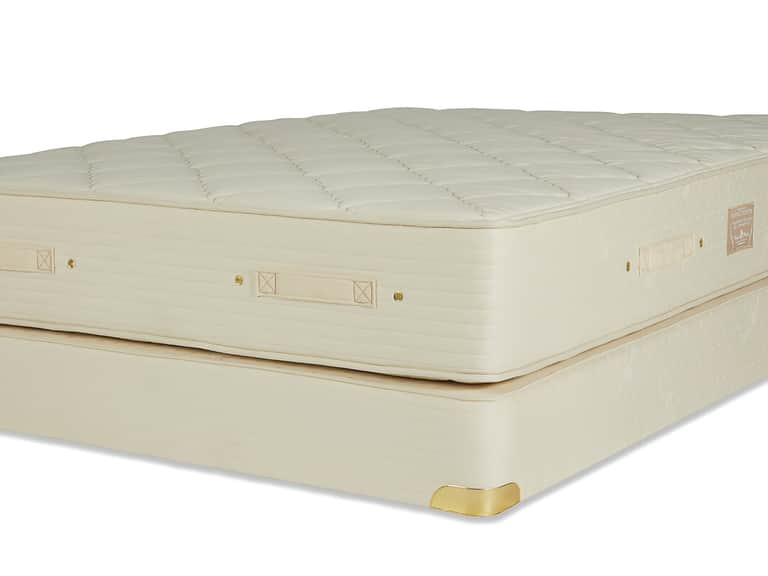
A crib mattress typically combines an outer cover with an internal support core. The cover is the surface that protects the interior; the core provides the mattress’s structure and firmness. Product descriptions may list cotton, wool, latex, foam, or other materials, but the names alone do not explain how the layers are assembled or how the finished mattress performs.
Start with the cover. Find out what fibers are used, whether the cover is removable, and whether the manufacturer permits washing it. A removable cover can sound convenient, but removing or replacing it must not compromise the fit or construction. Do not assume that an item described as washable can be machine-washed, or that a cover can safely be used while damp. Follow the care label and the full instructions for the specific model.
Then examine the core. Ask what it is made from and whether the manufacturer describes its firmness and intended use as a crib mattress. Some mattresses use a single core; others combine materials. A clear description should tell caregivers what is inside without requiring them to infer the construction from marketing language.
Weight, thickness, and handling can also affect day-to-day use, particularly when changing sheets or moving the mattress for cleaning. Those are practical considerations, but they should not override fit, firmness, or manufacturer guidance. A mattress that is easy to lift is not automatically better, and a heavier one is not automatically more durable.
Where a product description leaves important points unanswered, ask the manufacturer: Is this model intended for the exact crib type? What materials are in the cover and core? Which parts are certified? What cleaning methods are allowed? How should the mattress be checked for wear? Specific answers are more useful than general assurances.
A practical way to read certifications and claims
Certification language can become a dense landscape of logos, abbreviations, and promises. A calm reading method helps separate the evidence from the presentation. First, identify the exact claim: organic fiber, emissions testing, restricted substances, or a manufacturing practice. Next, determine whether the claim applies to the whole mattress or only a component. Finally, look for a named standard and a way to verify that the specific product is covered.
- Look for scope: Does the documentation name the cover, filling, core, or finished mattress?
- Check the standard: What does the certification assess, and what does it leave outside its scope?
- Confirm the product: Does the certification apply to this model or only to a material supplier or product family?
- Read the fine print: Are claims qualified, and do the care instructions or warranty impose conditions?
- Keep the evidence: Save the product label, manuals, and certification information for future reference.
Certifications can offer independent checks, but they are not a substitute for responsible product use. A mattress with a respected textile certification can still be the wrong size or unsuitable for a particular crib. Conversely, the absence of a particular logo does not, on its own, establish that a mattress is unsafe. Evaluate the full construction and the available documentation rather than treating one mark as a universal verdict.
Care that protects the mattress—and its purpose
Care begins with the manufacturer’s instructions. They may specify spot-cleaning, approved detergents, drying methods, or restrictions on soaking and machine washing. These details matter because moisture can affect internal materials, and aggressive cleaners may damage a cover or compromise a finish. Never improvise with a cleaning method simply because it works on another mattress.
Use a fitted sheet that is the right size for the mattress and designed to stay in place. Make sure it is secure and smooth before each sleep. If the manufacturer permits a protector, confirm that it is intended for that specific mattress and does not alter the required firm, flat surface or interfere with fit. Do not layer several products in an effort to create a barrier or softer feel.
For spills or accidents, follow the stated cleaning steps promptly, then allow the mattress to dry completely as directed before using it again. Avoid putting a damp mattress back into the crib. If the cover is removable, check whether the maker allows laundering and how the cover should be reinstalled; a loose, stretched, or incorrectly fitted cover can change the way the surface sits.
Inspect the mattress periodically. Look for tears, broken seams, sagging, exposed filling, persistent dampness, or any other change that could affect its firmness, shape, or fit. Replace a damaged mattress rather than attempting an unapproved repair. Keep the warranty and care documents accessible, and note any cleaning limits that might affect coverage.
A crib mattress does not need elaborate treatment to remain serviceable. Clean when necessary, dry fully, and avoid unapproved oils, sprays, powders, or solvents. More product is not always more protection; sometimes it is simply another variable in a sleep space that works best when kept uncluttered.
Questions worth asking before you buy
A short checklist can keep the decision grounded when product pages use similar language. Before purchasing, make sure you can answer these questions clearly:
- Does the mattress match the crib manufacturer’s specified size and type?
- Is it described as a firm, flat surface intended for infant sleep?
- What materials are used in the cover and core?
- Which parts, if any, are certified organic or assessed under another standard?
- Can the certification be verified for this particular model?
- What cleaning methods are allowed, and how should the mattress be dried?
- What signs of damage or wear mean it should no longer be used?
- Are any accessories required or permitted, and do they preserve a safe, snug fit?
For a used mattress, add a careful condition check. Confirm its origin and model, inspect the full surface and edges, and seek manufacturer guidance if its history, condition, or compatibility is uncertain. A mattress that has been stored poorly, exposed to moisture, or altered may not be suitable. Do not assume that a cover hides harmless wear.
The quiet value of a clear choice
Organic crib mattress shopping can invite a familiar kind of modern uncertainty: one more label to decode, one more claim to weigh, one more choice that seems to carry enormous consequence. The way through is not to chase every promise. It is to distinguish what is measurable from what is merely suggestive.
First comes compatibility: the mattress must fit the crib specified by its maker. Then comes the sleep surface: firm, flat, and used according to current safe-sleep guidance. Materials and certifications add useful context when their scope is explicit. Care instructions help preserve the product without adding unnecessary layers or unapproved treatments.
Those priorities do not make the decision less thoughtful. They make it more so. A clear product description, a verifiable material claim, and a straightforward cleaning routine are more valuable than vague declarations about purity. The right crib mattress is one caregivers can identify, fit, inspect, and maintain with confidence—and use as intended, night after night.
Frequently asked questions
Does an organic label mean the whole crib mattress is organic?
Not necessarily. The claim may apply to one material, such as the cotton in a cover, rather than every component or the finished mattress. Check the documentation for the exact material and certification scope.
How do I know whether a crib mattress fits?
Follow the crib manufacturer’s instructions and use the mattress size specified for that model. The mattress should sit securely and flat, without significant gaps around its edges. Ask the manufacturers to confirm compatibility if details are unclear.
Can I add a topper or extra pad to make the mattress more comfortable?
Do not add a topper, cushion, or improvised layer to an infant sleep surface. Use a firm, flat mattress with a correctly fitted sheet and follow current safe-sleep guidance and the product instructions.
What is the best way to clean an organic crib mattress?
There is no universal method. Follow the care instructions for the exact model, including any limits on washing, detergents, and drying. Do not return a mattress to use until it is completely dry as directed.